

-36x36.jpg)
-36x36.jpg)






-60x60w.jpg "ARIADNA by Vorteleather — Women’s Leather Jacket")

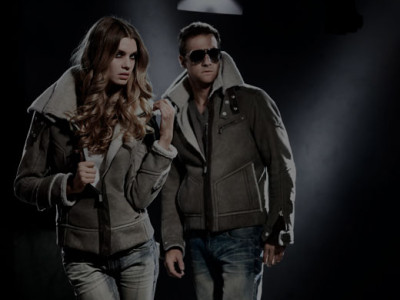

In a world overloaded with one-season items, real quality often hides behind loud logos. But for a P.Vorte Custom Leather Studio client, a leather jacket isn’t just another purchase. It’s an investment in emotion, comfort, and status.
How do you tell a masterpiece from mass-market? We won’t tell you to “save money.” We’ll teach you to invest wisely—by focusing on four fundamental pillars of quality.
1. The Material: Leather That Breathes
Many brands use coarse pigskin or cheap buffalo leather, masking imperfections with heavy layers of paint. That creates a “plastic” effect.
The P.Vorte philosophy is tactile hedonism. We favor premium sheepskin (lambskin) and young lamb leather. Why? It’s lightweight, pliable, and has a “living” structure. When you run your hand over it, you should feel warmth and softness—not cold, glassy slickness.
Sign of quality: No unnatural shine or stiffness. The leather should regain its shape after you squeeze it, and the grain pattern should look natural, not stamped.
2. The Soul of the Piece: The Lining
The inner world of a jacket matters more than the outer—because it’s what touches your body. Cheap polyester doesn’t let skin breathe, creating a “greenhouse effect.”
True luxury means natural materials:
- Viscose or Cupro: breathable fabrics that are durable and pleasant to the touch.
- Silk: for those who value absolute softness.
If we’re talking insulated models, the best indicator is natural fur. You don’t need to burn it to check authenticity (as old guides used to suggest). Simply part the pile: natural fur grows from leather (the hide), while faux fur is attached to a textile base.
3. The Mechanics: Hardware as a Jewelry Element
The sound of a zipper closing should be “music” to your ears—a smooth, precise motion with a clean metallic click. Cheap hardware is the weak point that fails first.
At P.Vorte, we don’t compromise. We use only global leaders:
- Riri (Switzerland) and YKK (Japan, Excella series): the benchmark of reliability. The teeth are perfectly polished, they won’t scratch your hands, and they can last for decades.
Pay attention to snaps: they should close with a satisfying resistance and sit firmly on a reinforced base, so a sudden pull won’t tear out a piece of leather.
4. The Geometry: Seams & Details
Tailoring quality is the maker’s signature. In mass production, seams often “wander,” and threads can break.
Look closely at the stitching. It should be:
- Even: the same stitch length across the entire garment.
- Strong: reinforced threads (e.g., Gutermann) help ensure the jacket won’t split at the seams at the worst moment.
- Clean: no loose threads or crooked topstitching on pockets.
When choosing a jacket, trust your senses. A true Artifact doesn’t raise doubts. It fits perfectly, smells noble, and looks as if it was made exclusively for you.